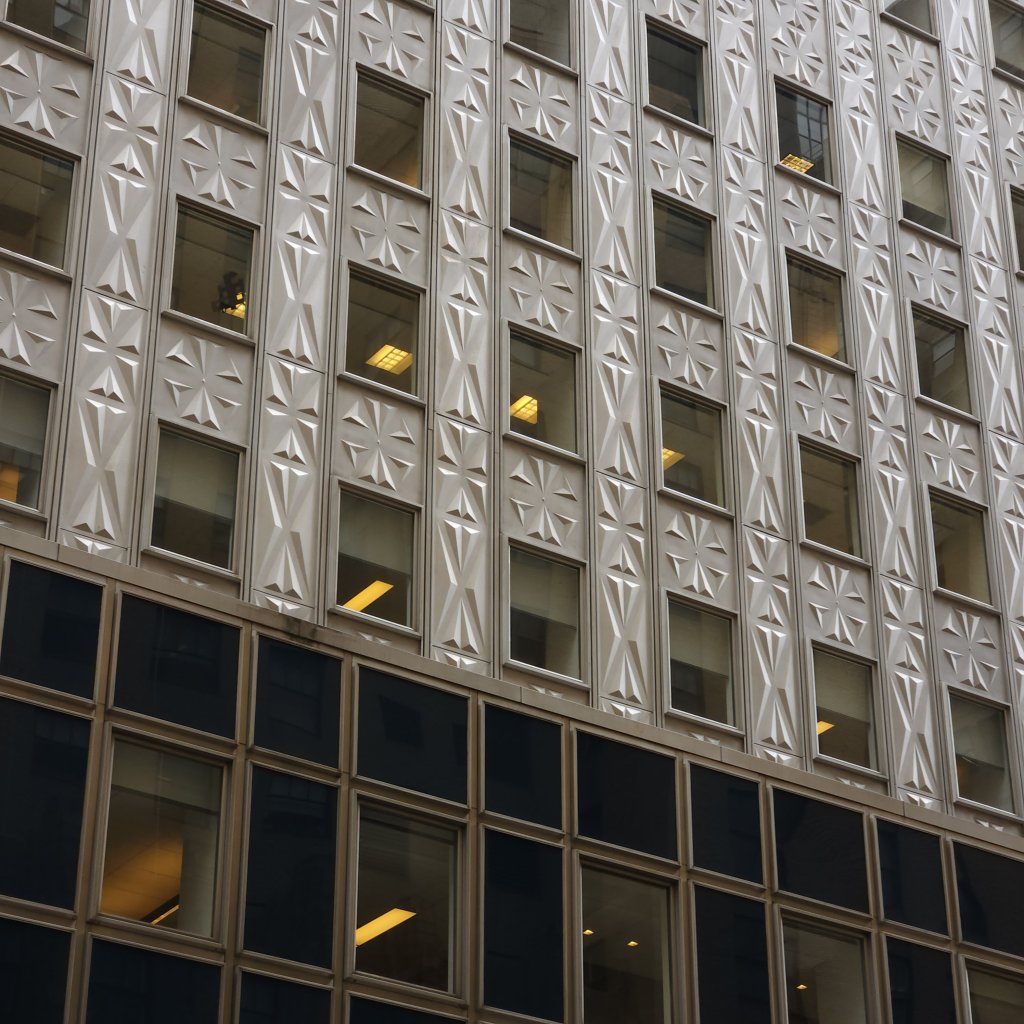
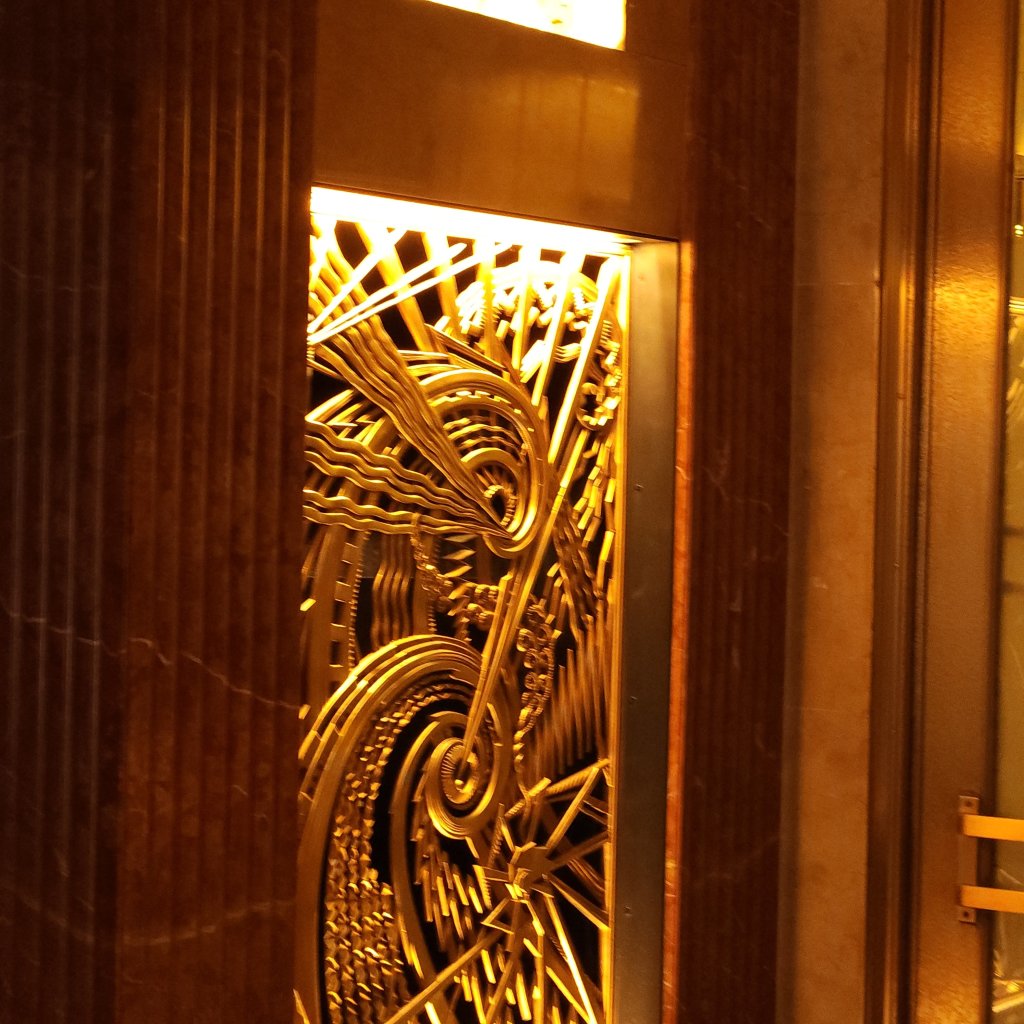
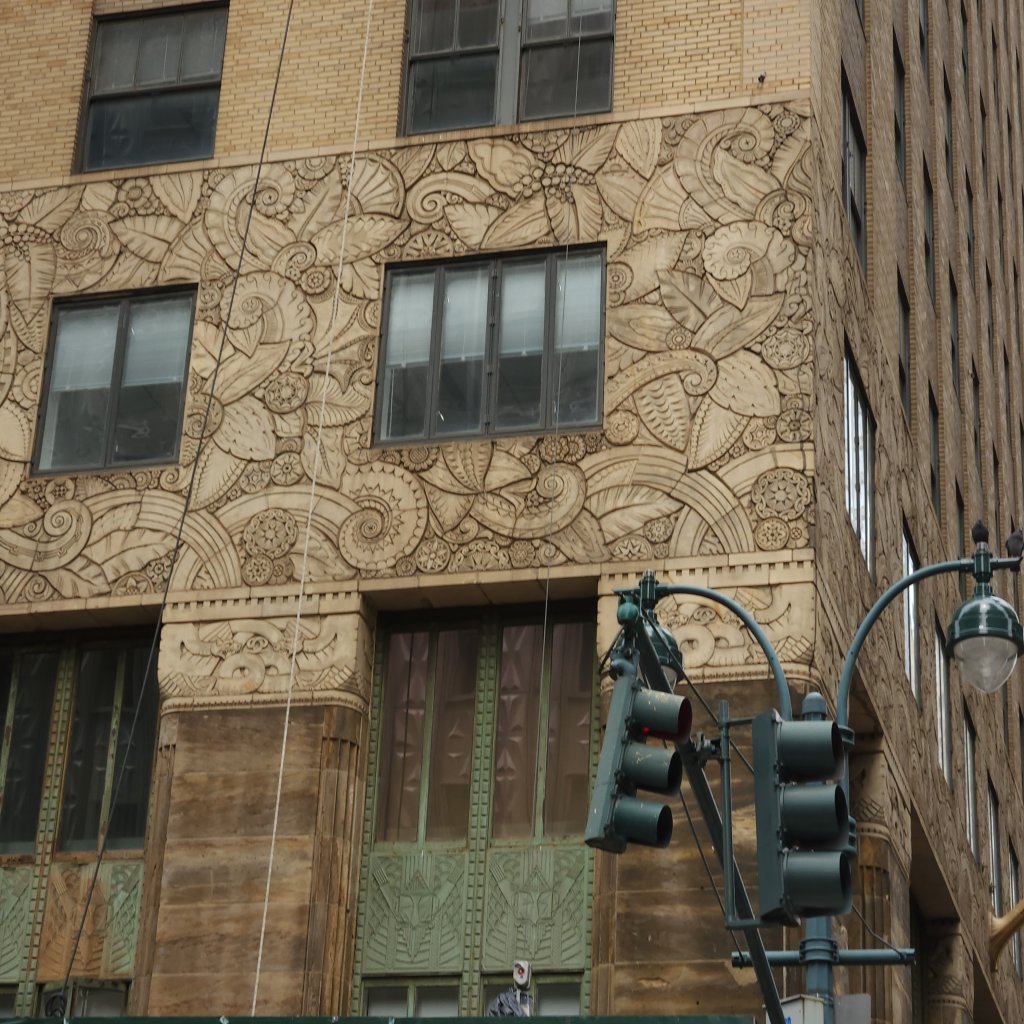
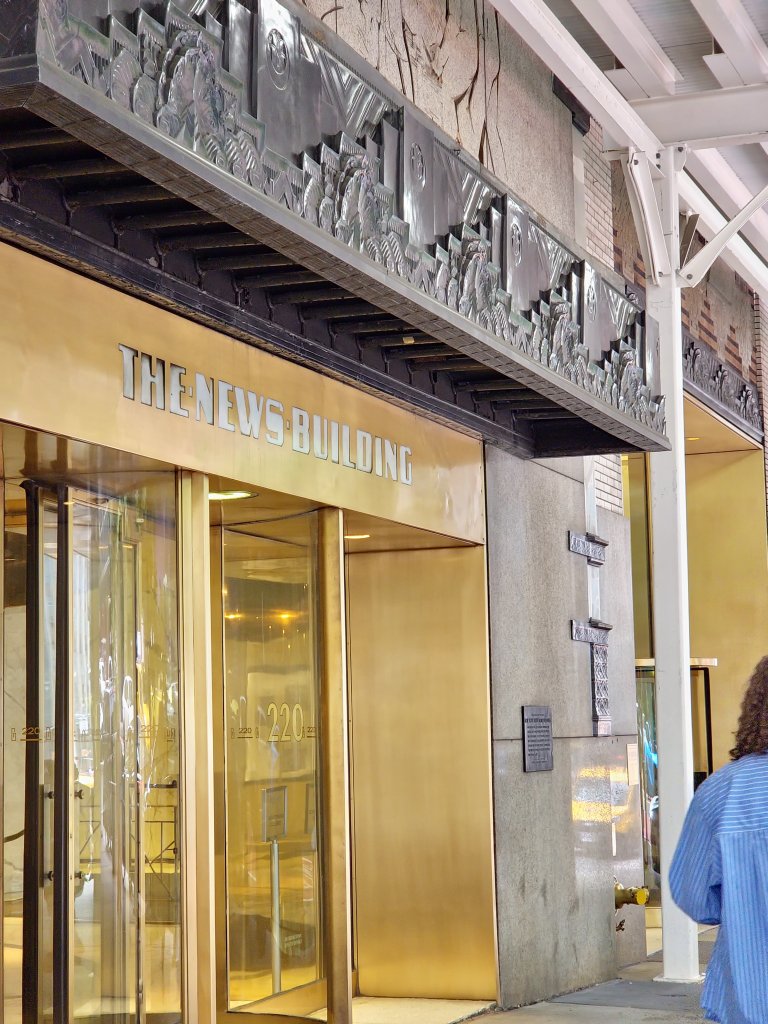
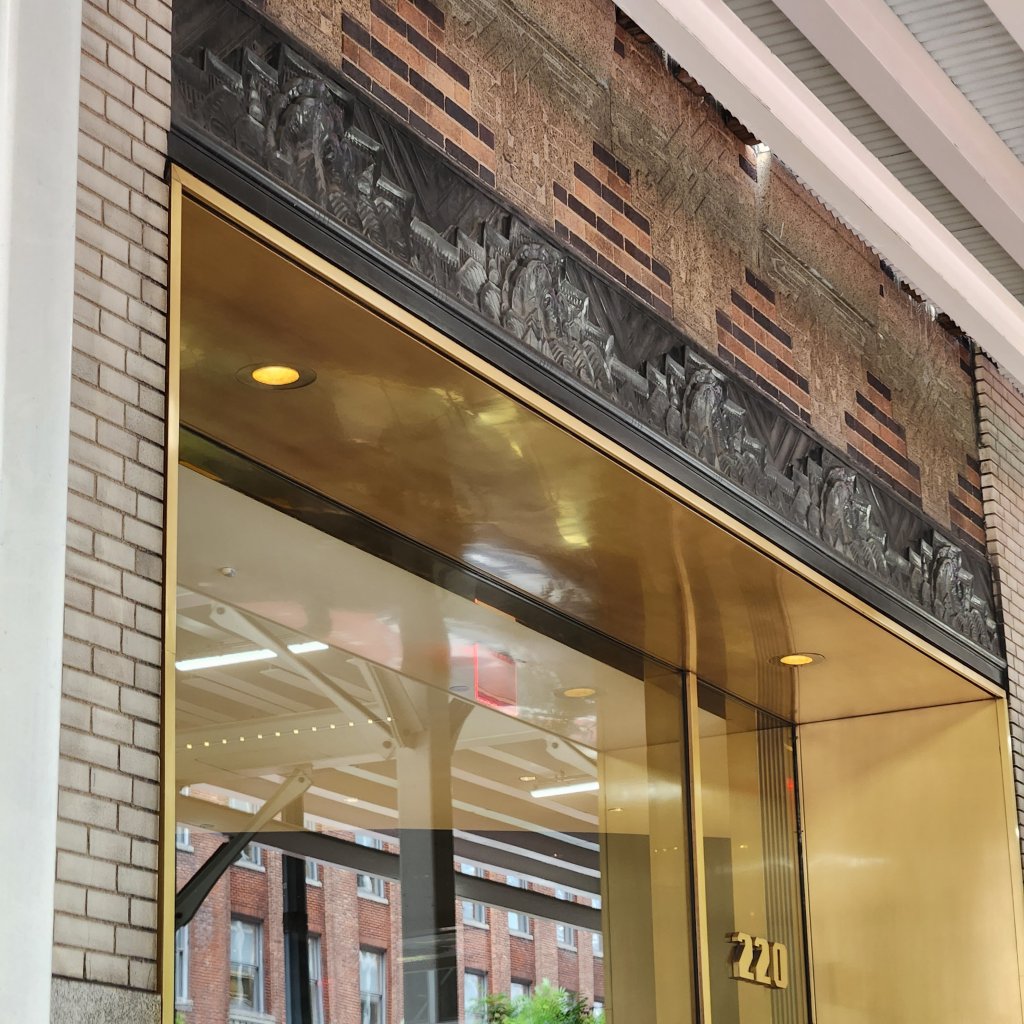
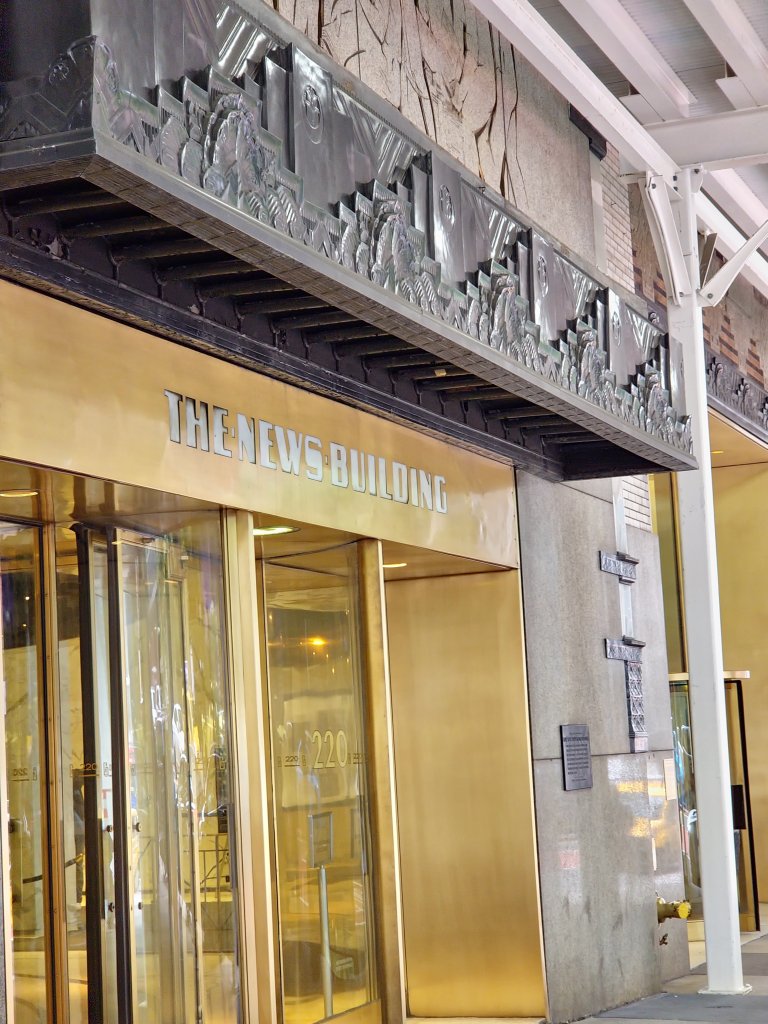
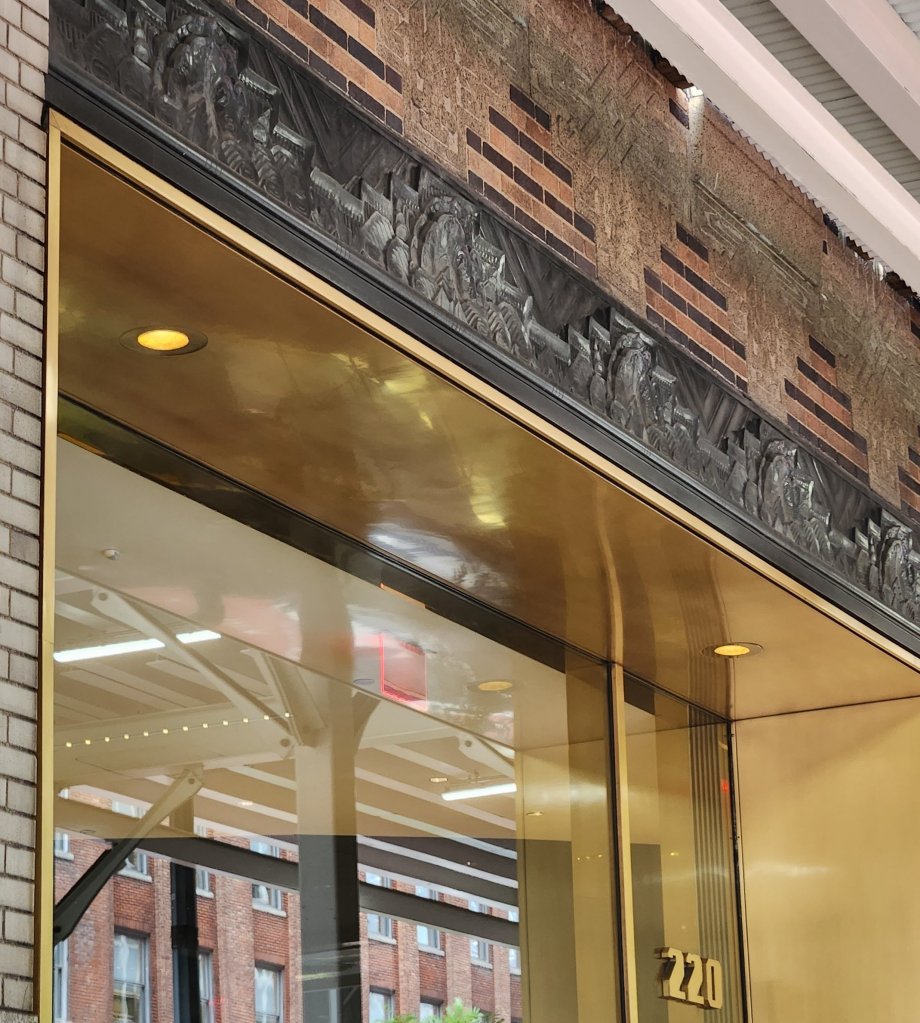
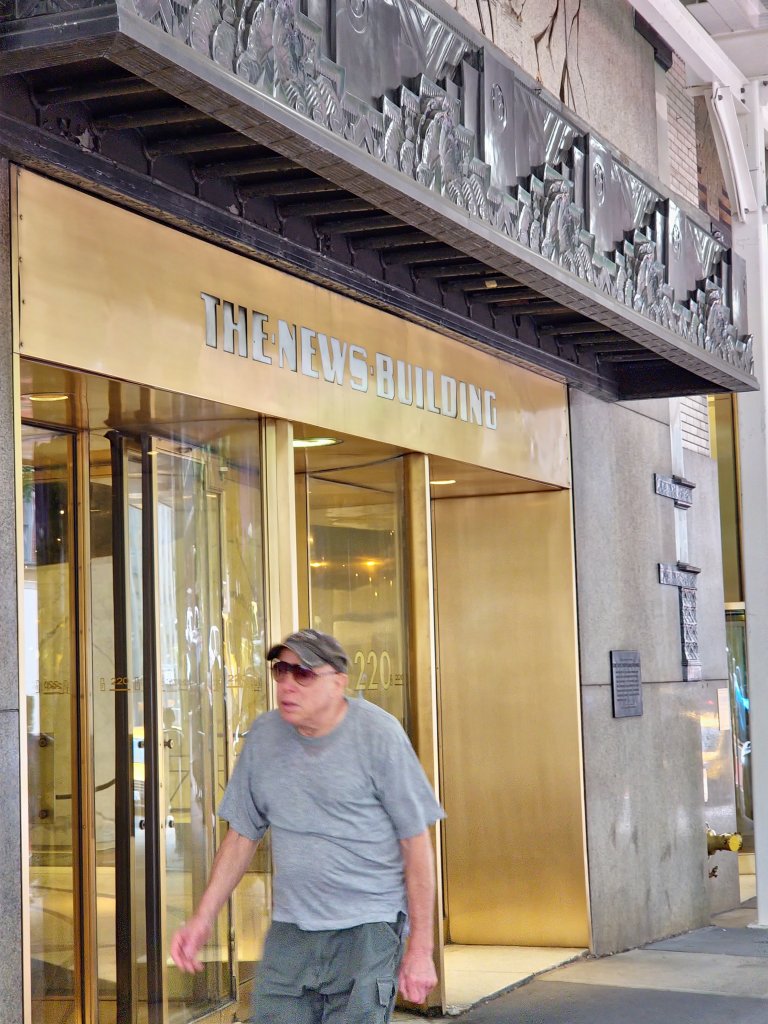
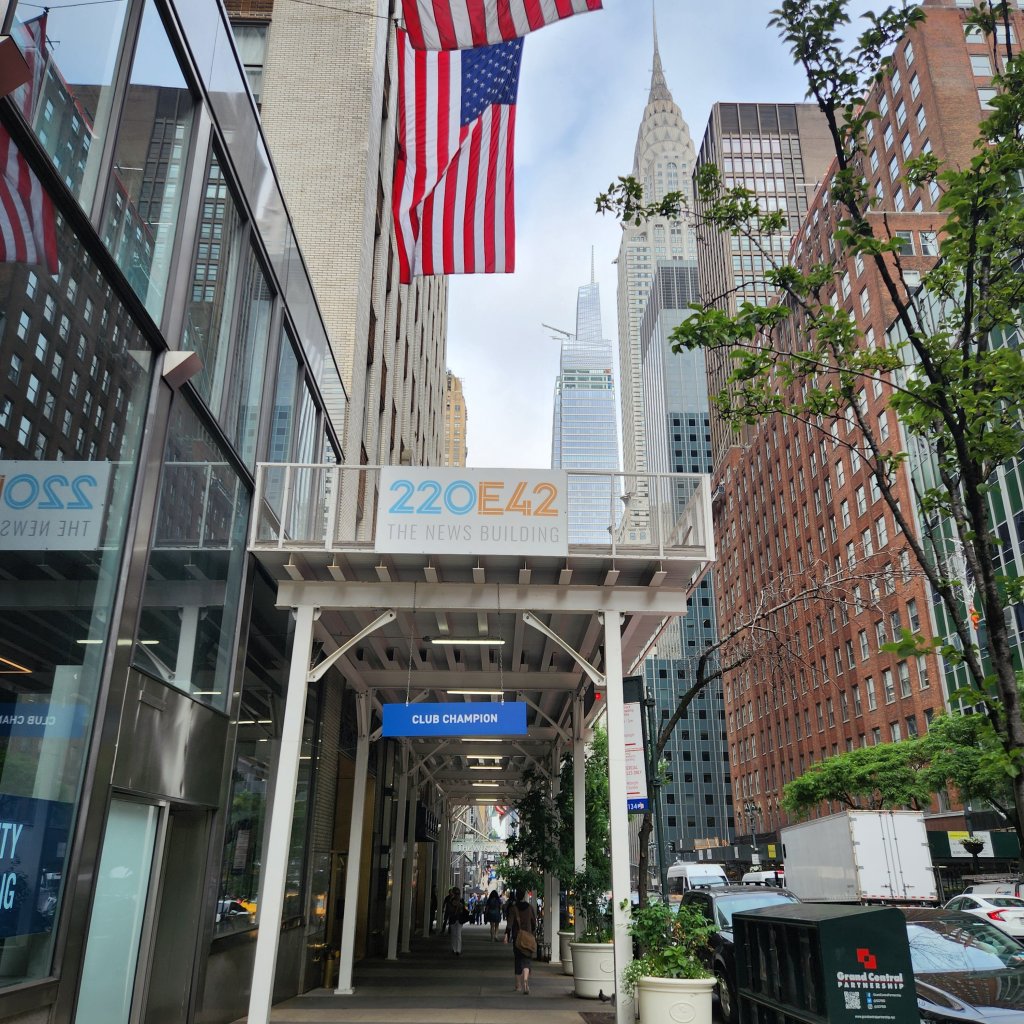
Deco predominated 42nd Street at one time.The News Building 220 E 42nd:renewal at the NewsThey’re a little late. Maybe next year like the old Brooklyn Dodgers.Scott Sylvester Quartet
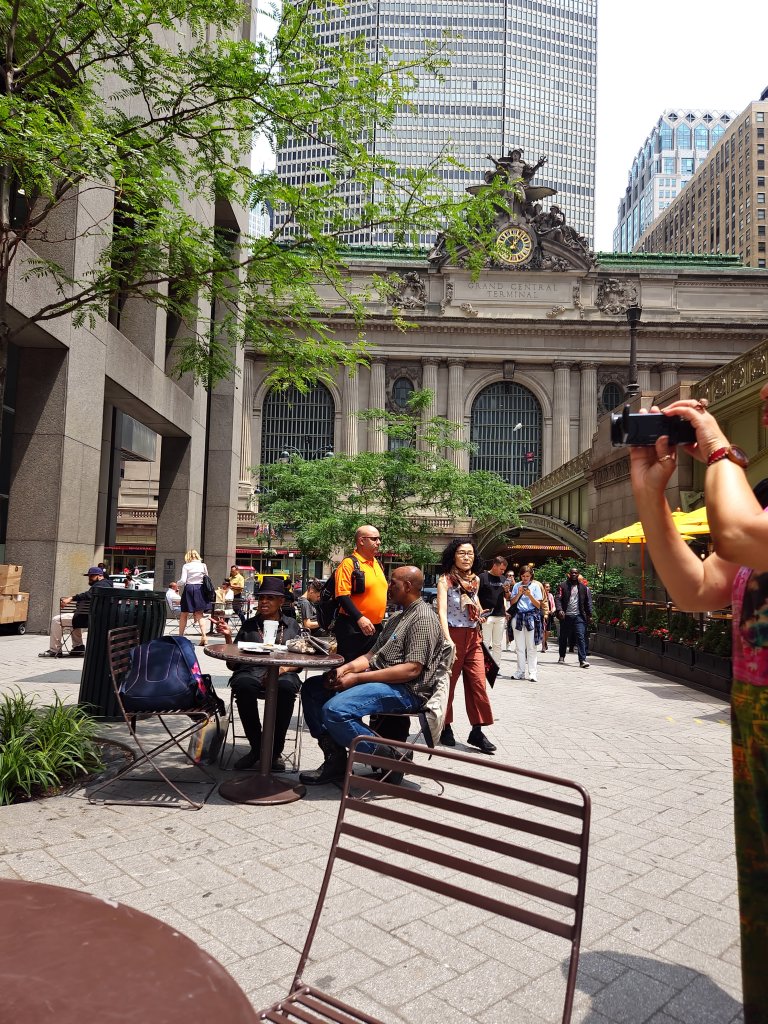
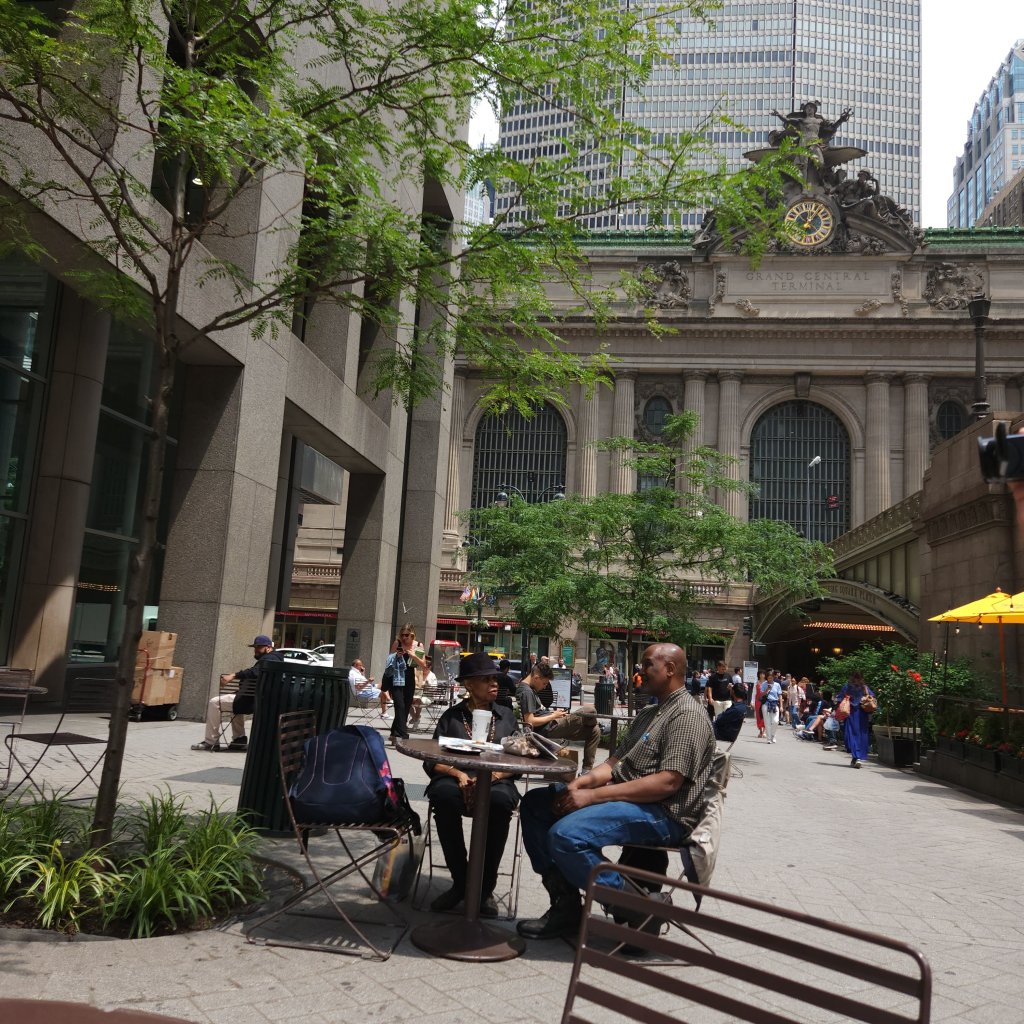
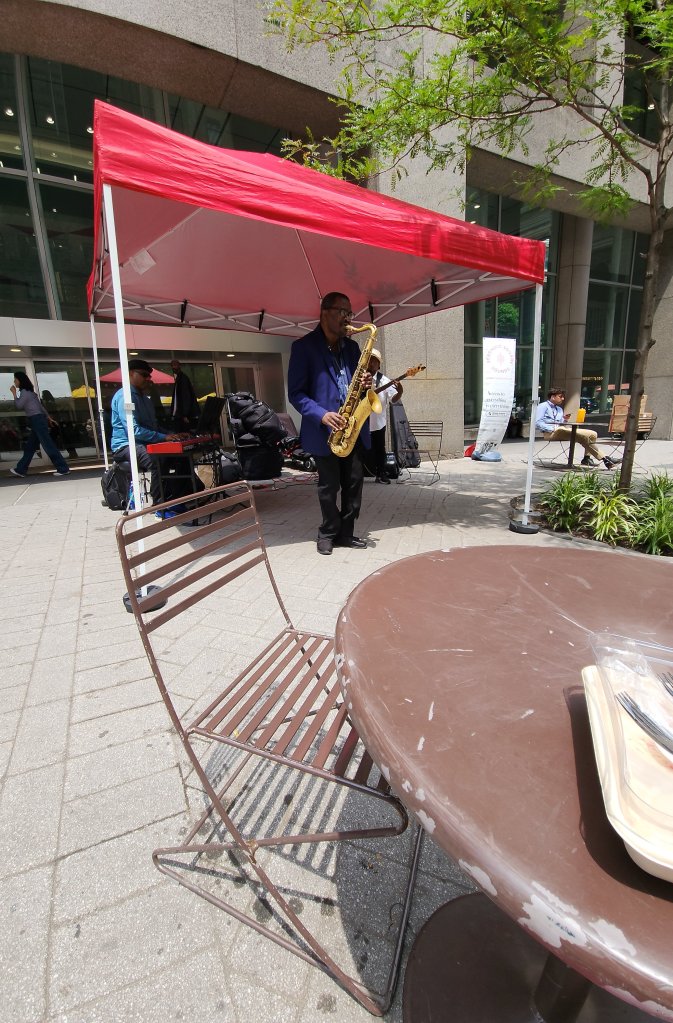
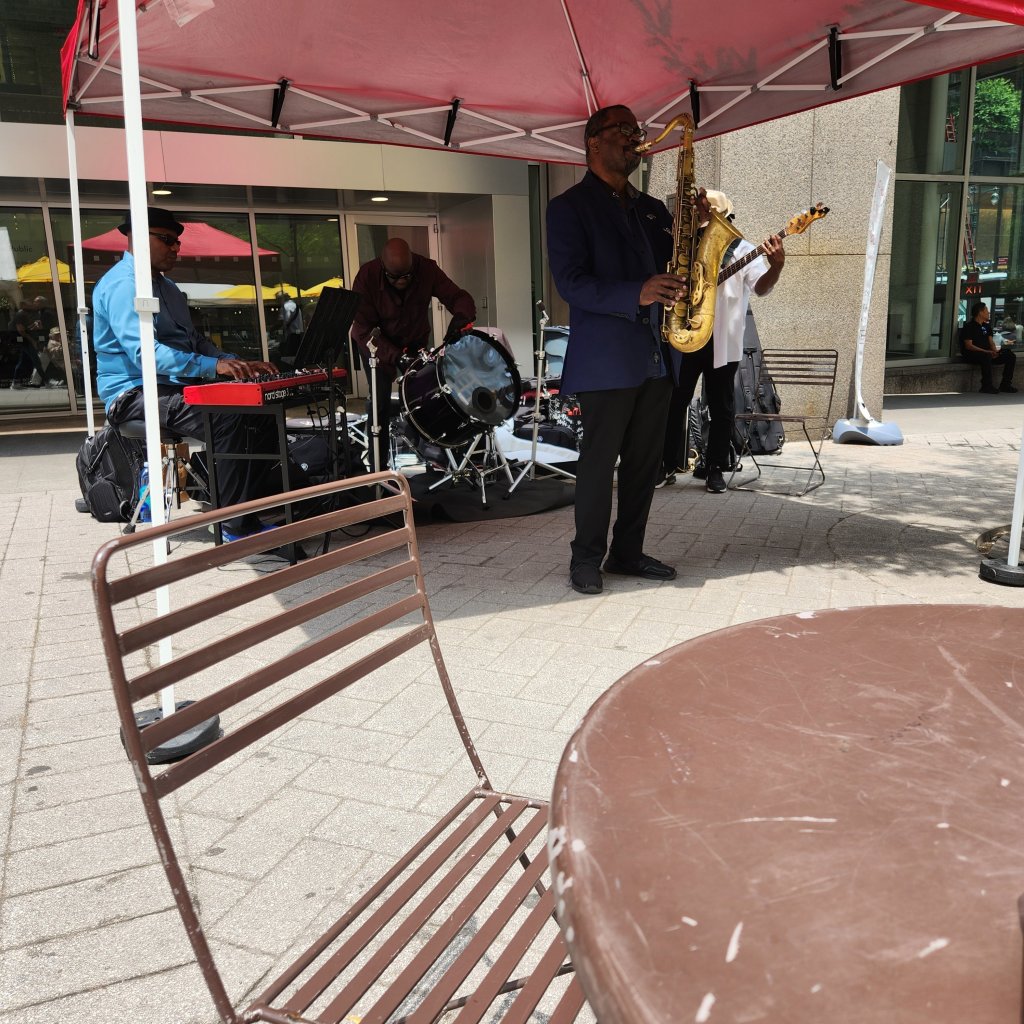
The tour ended with lunch al fresco to a jazz fest by the Sylvester Scott Trio. Once the drummer arrives, it will be the Sylvester Scott Quartet.
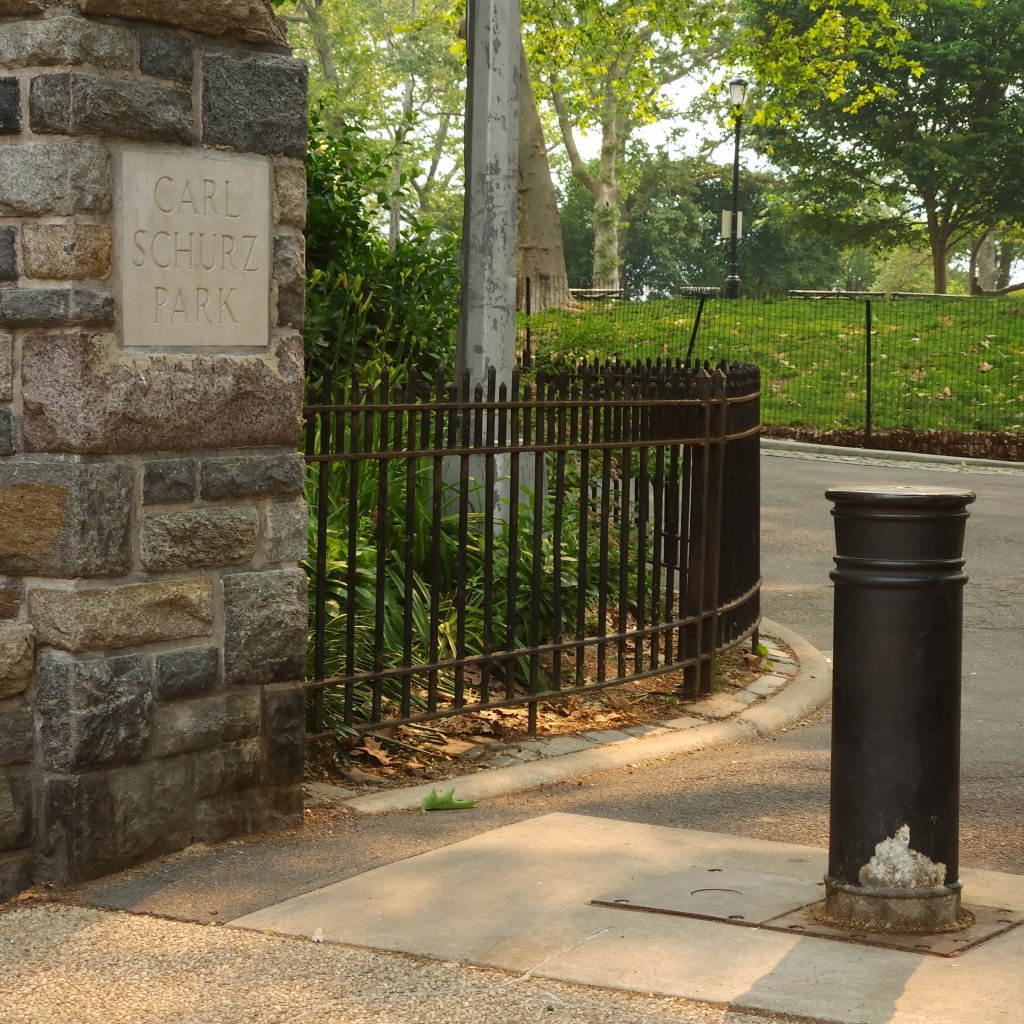
It’s a public park that is also the gateway to the Mayor’s mansion.
Gracie Mansion was built by a rich merchant eons ago. Archibald Gracie did not hold onto his wealth. The property fell into the public domain as it were.
In 1942, after much repurposing of the house, Fiorello LaGuardia became the first mayor to take occupancy.
Word is that he did not come into his new home with a whole heart. On the other hand, it does my heart good to find myself anywhere in the vicinity of the mayoral residence and its pastoral surrounds.
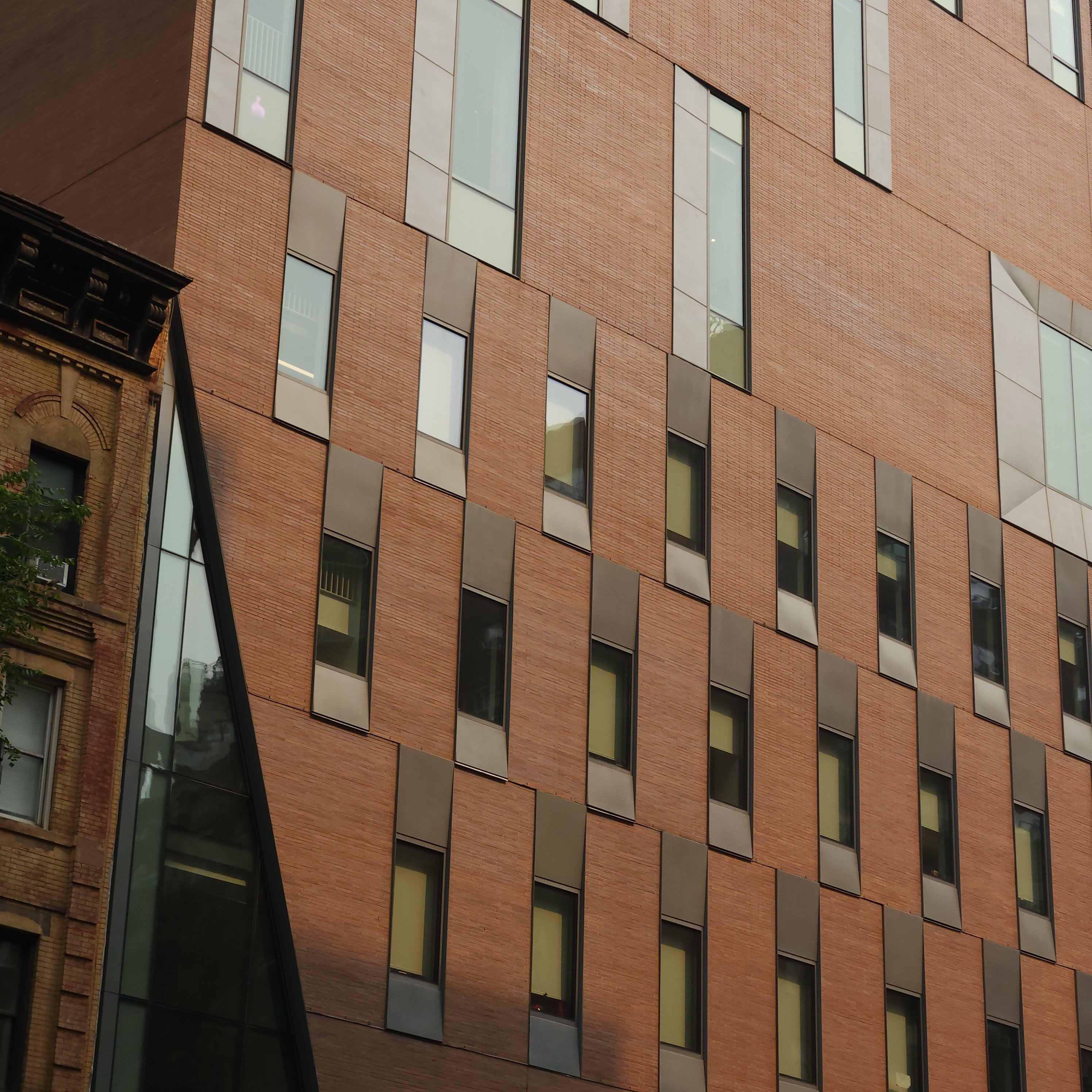
The lines and textures of this new HQ (relatively) for the Brearley School are very pleasing.
The eye enjoys this facade because it is dynamic. At least, that is my take on this subject.
There are conscientious touches like a green sustainable rooftop where students participate in planting. This makes Brearley a LEED Gold teaching facility.
The building design is the work of KPBM Architects. It was completed in 2019 as an expansion meant to link the building at 610 East 83rd with the new structure at 590.
I need to have a conversation with Henry James. He seems to have a grasp on the atmosphere of the NYC of his time. His time is something I would like to recapture.
I guess I could do very well speaking with Edith Wharton as well. She would be a fount of interesting tidbits about life here back in the day.
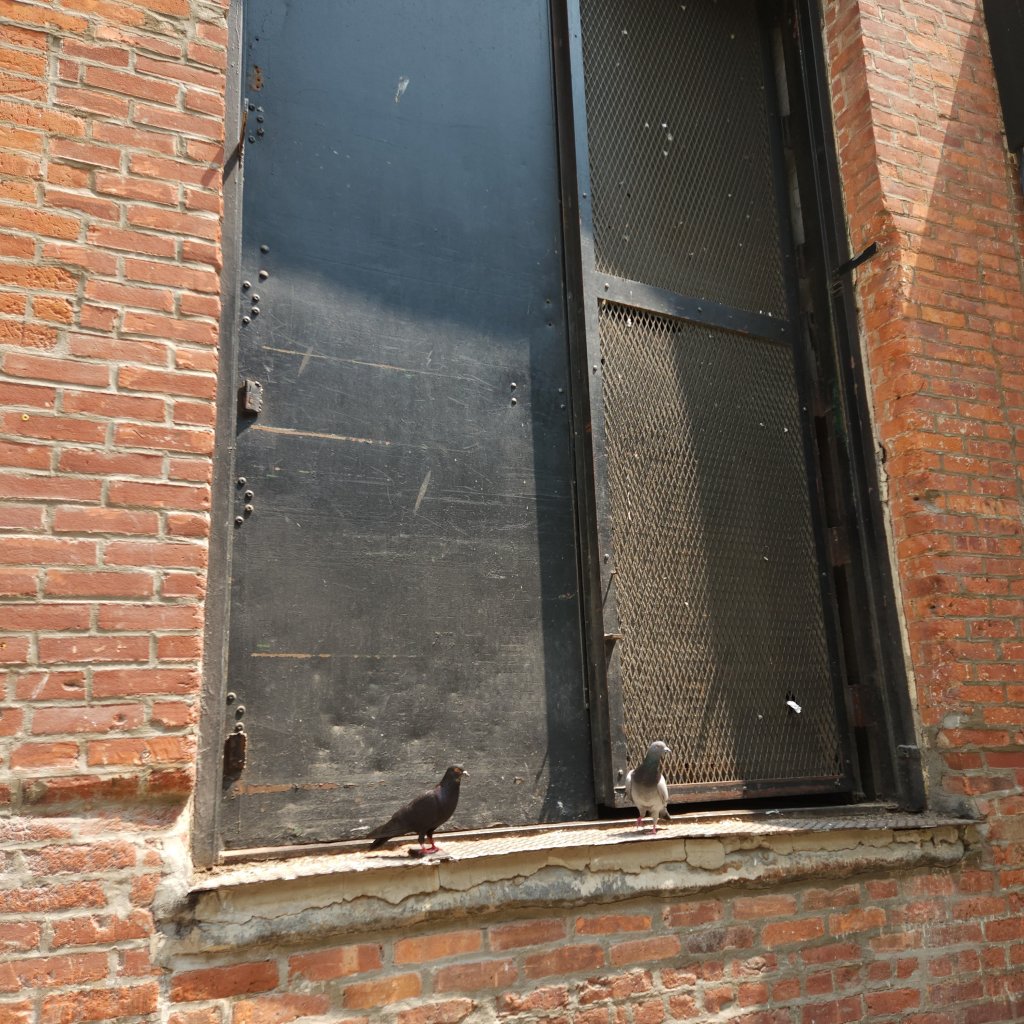
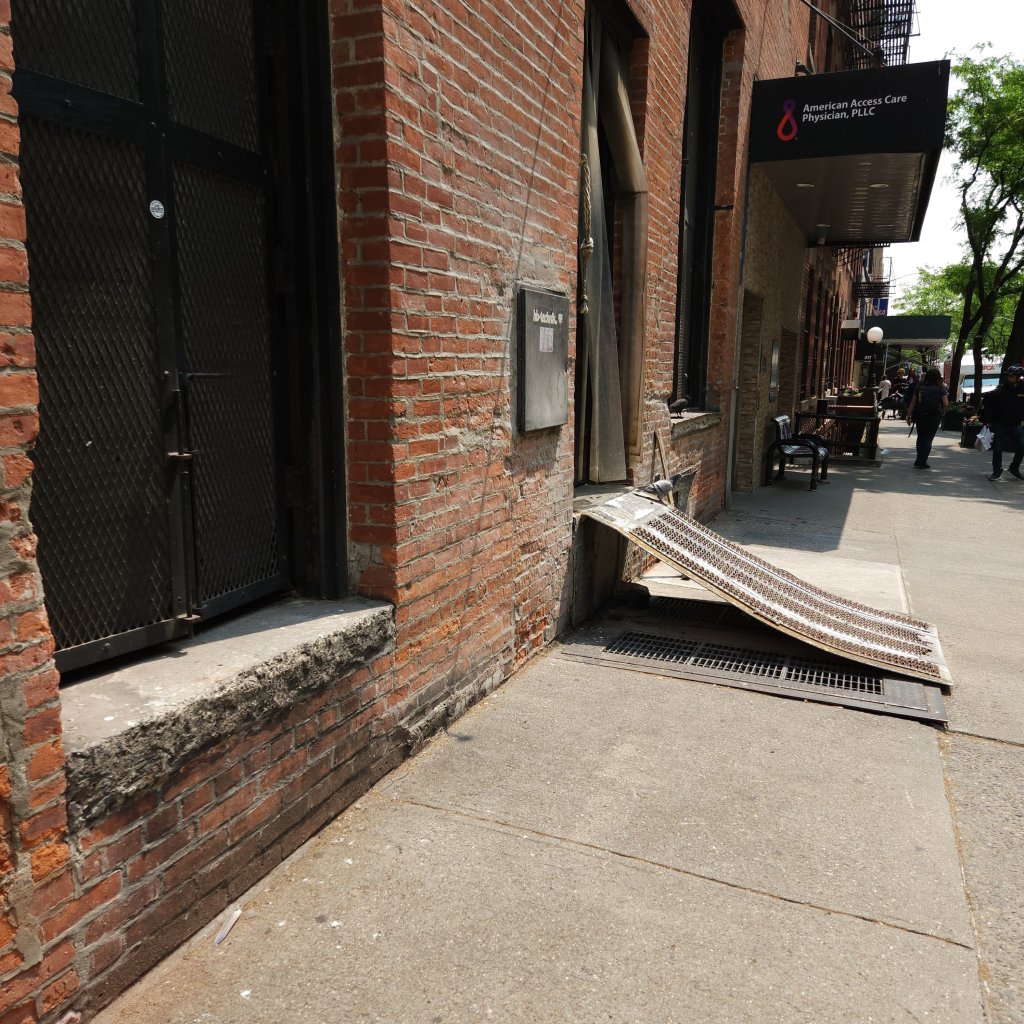
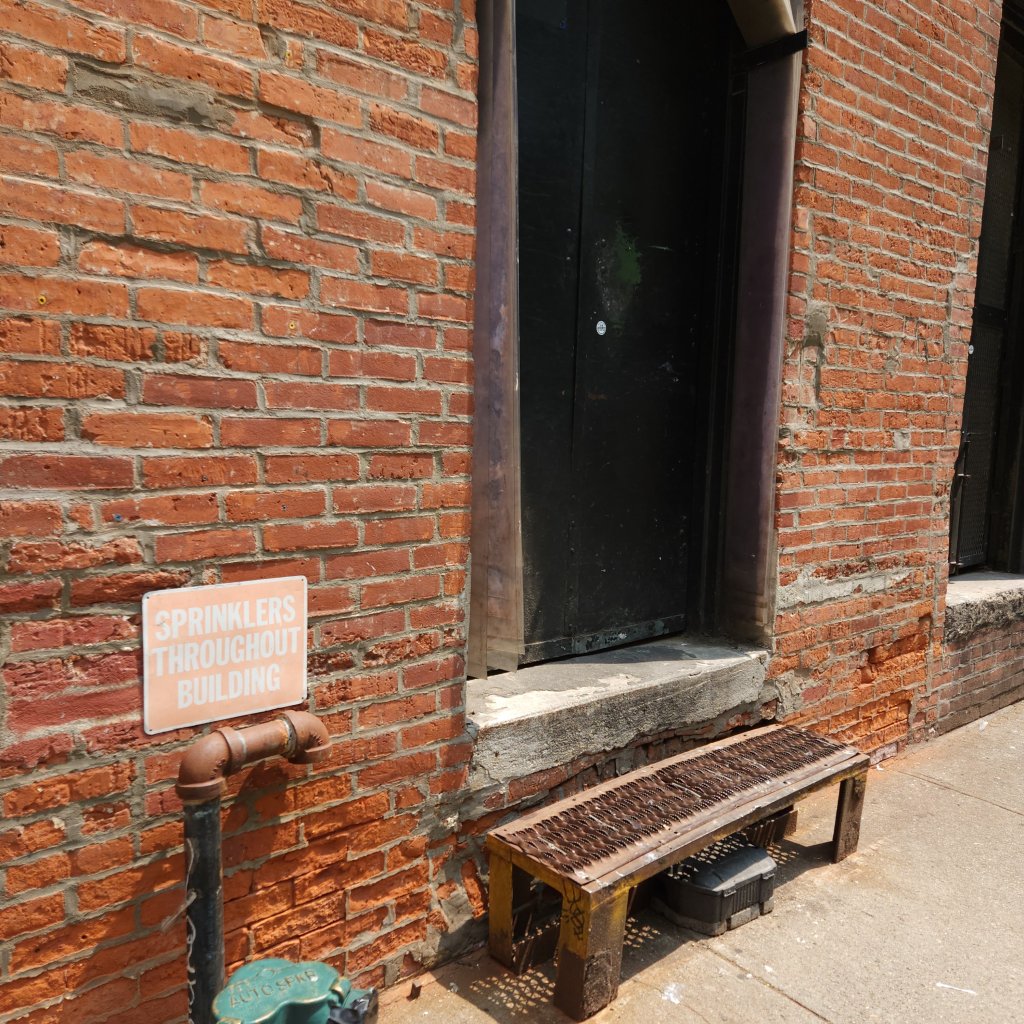
Remnants of old industrial properties are pretty rare. This one on East 91st is a sweet throwback. I never thought of the loading dock as a decorative detail before.
As interesting and attractive as these historic artifacts might be, they lack modern amenities and luxury. They were built as tenements, and along with their landmark designation comes a prohibition to make any improvements. This brings up the question of whether conserving them is beneficial.
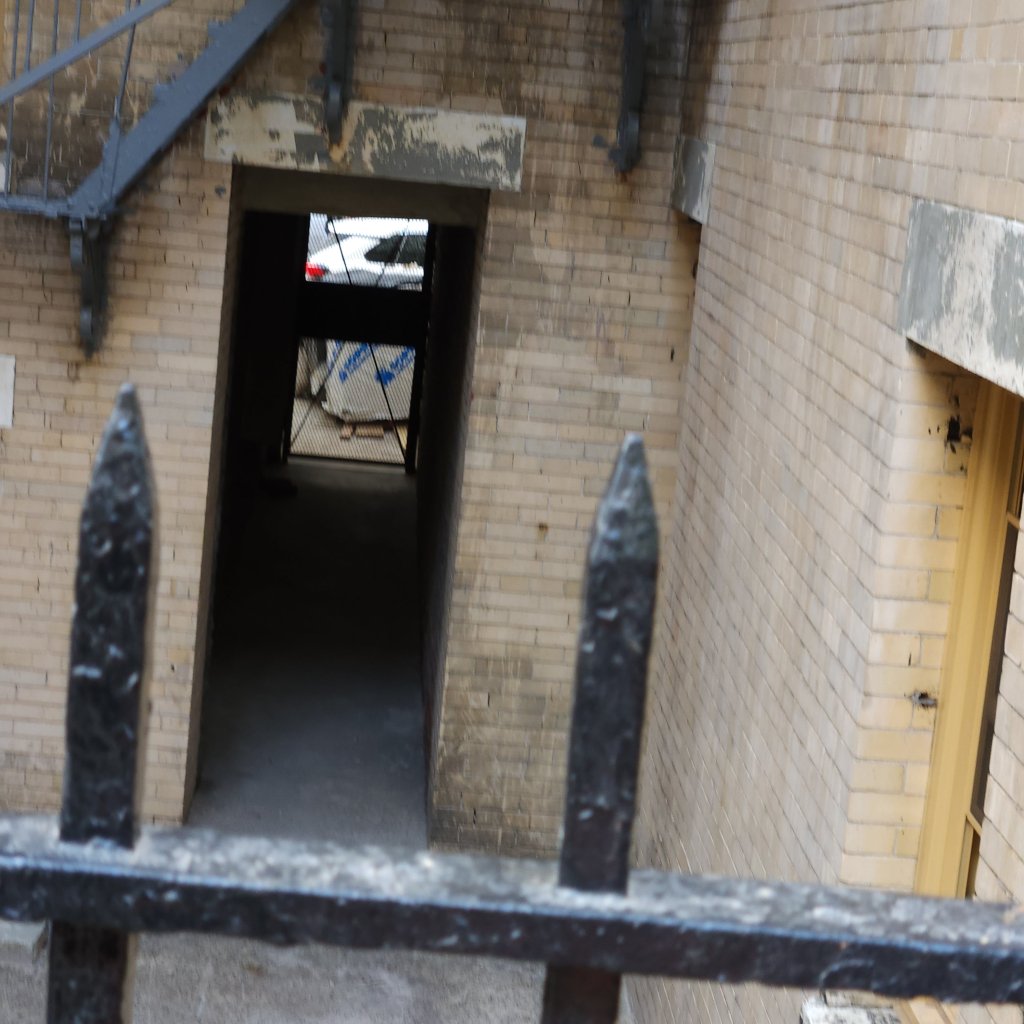
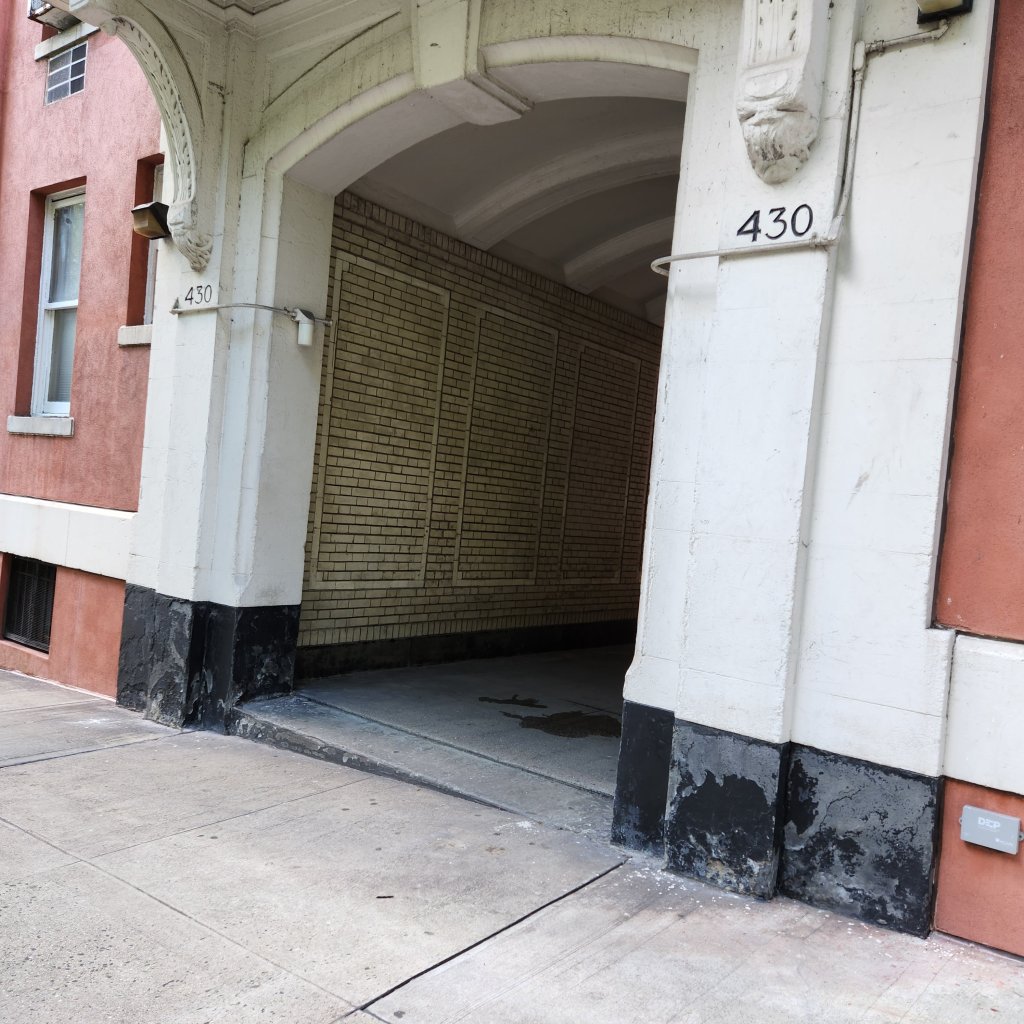
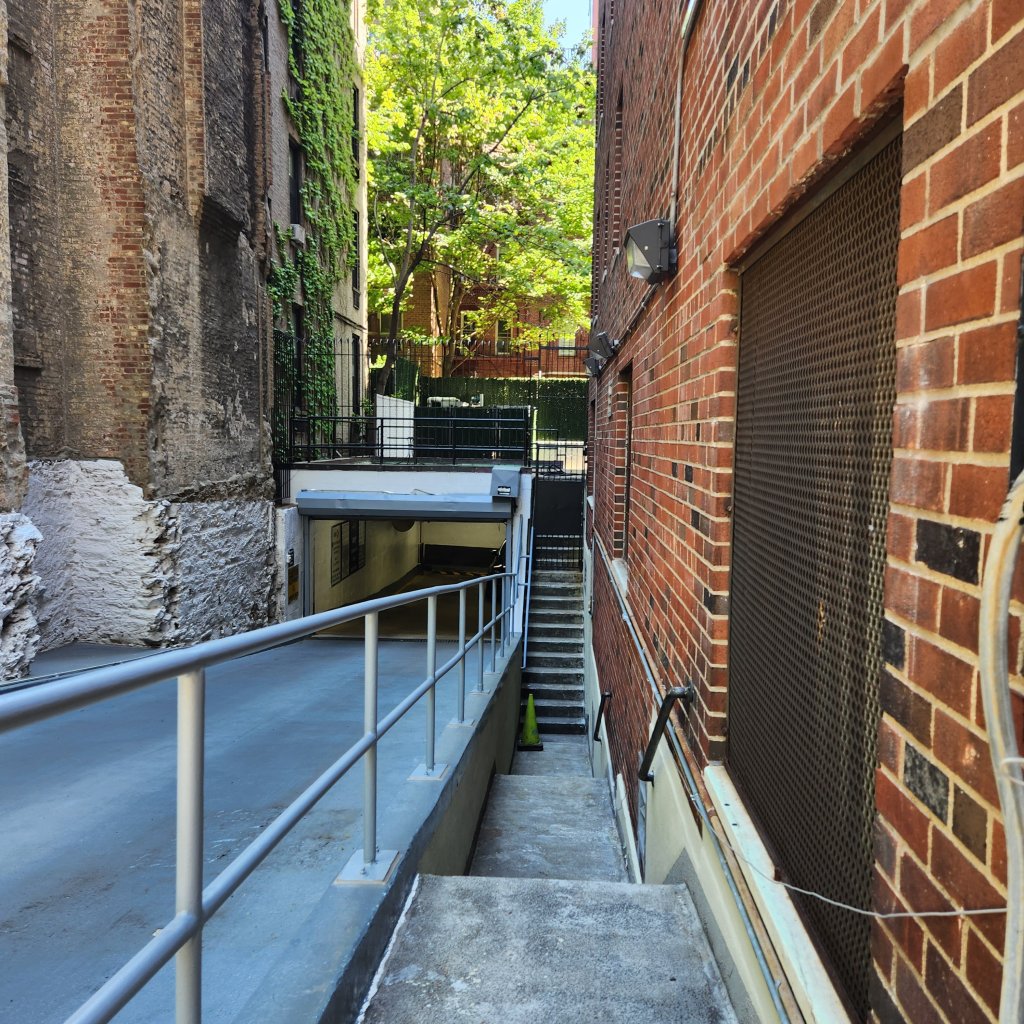
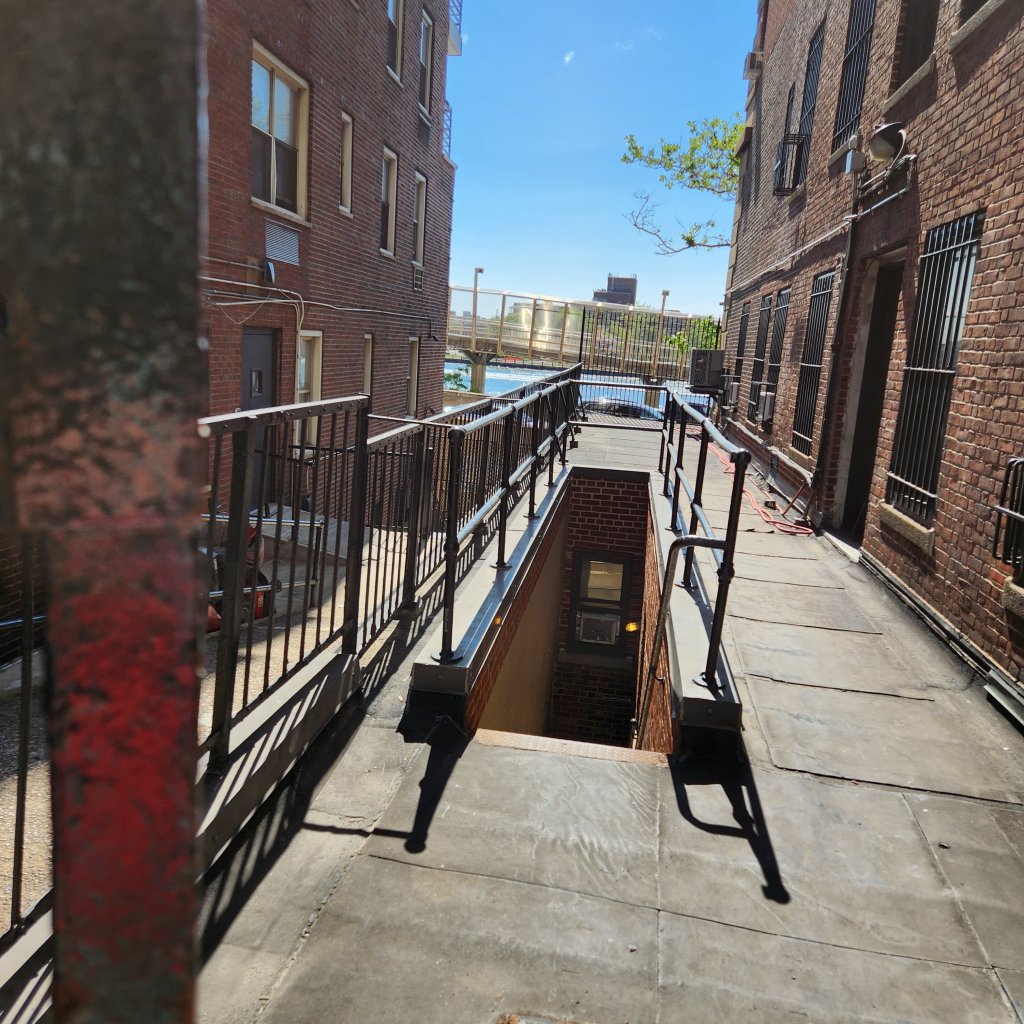
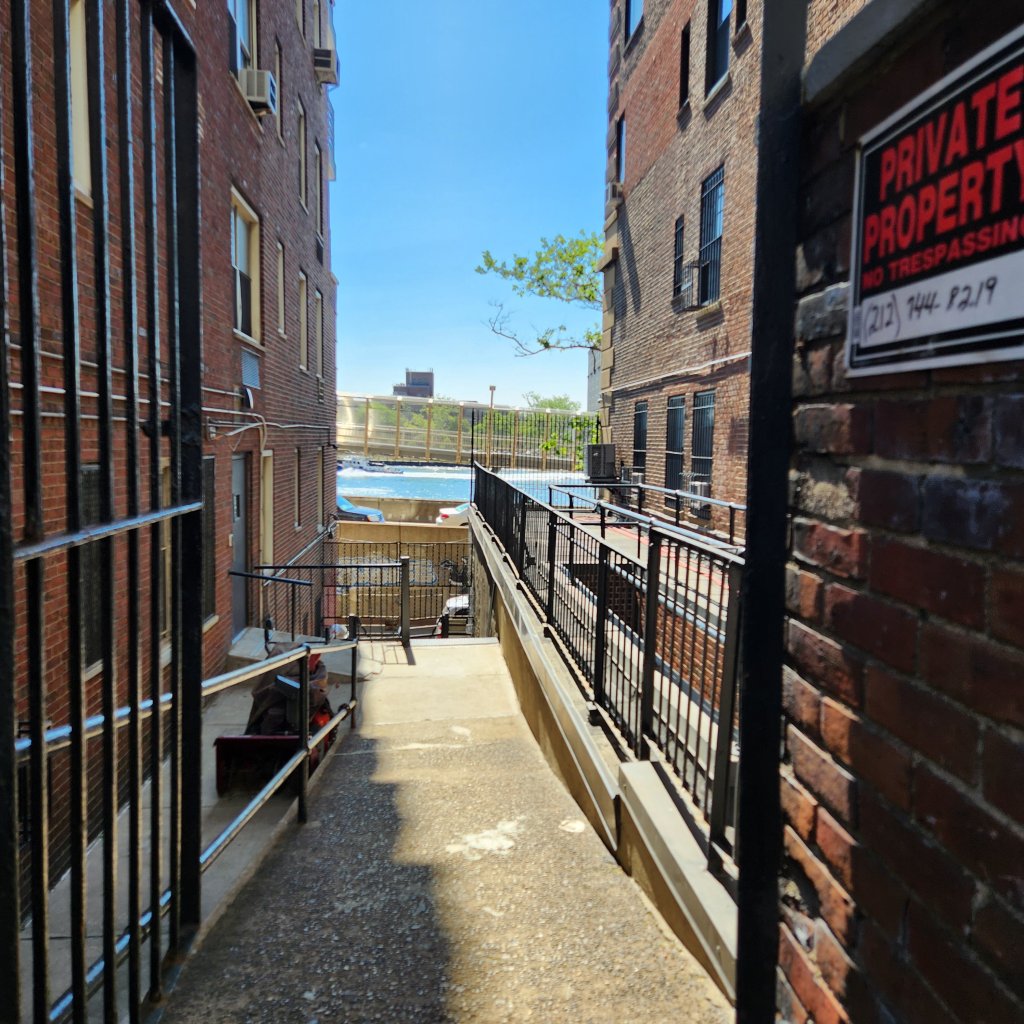
Technically, it’s not a passage here on 83rd off East End but just a gap in the building line.Garage runs under, and the stairs run up to a back alley passage also on 83rd.
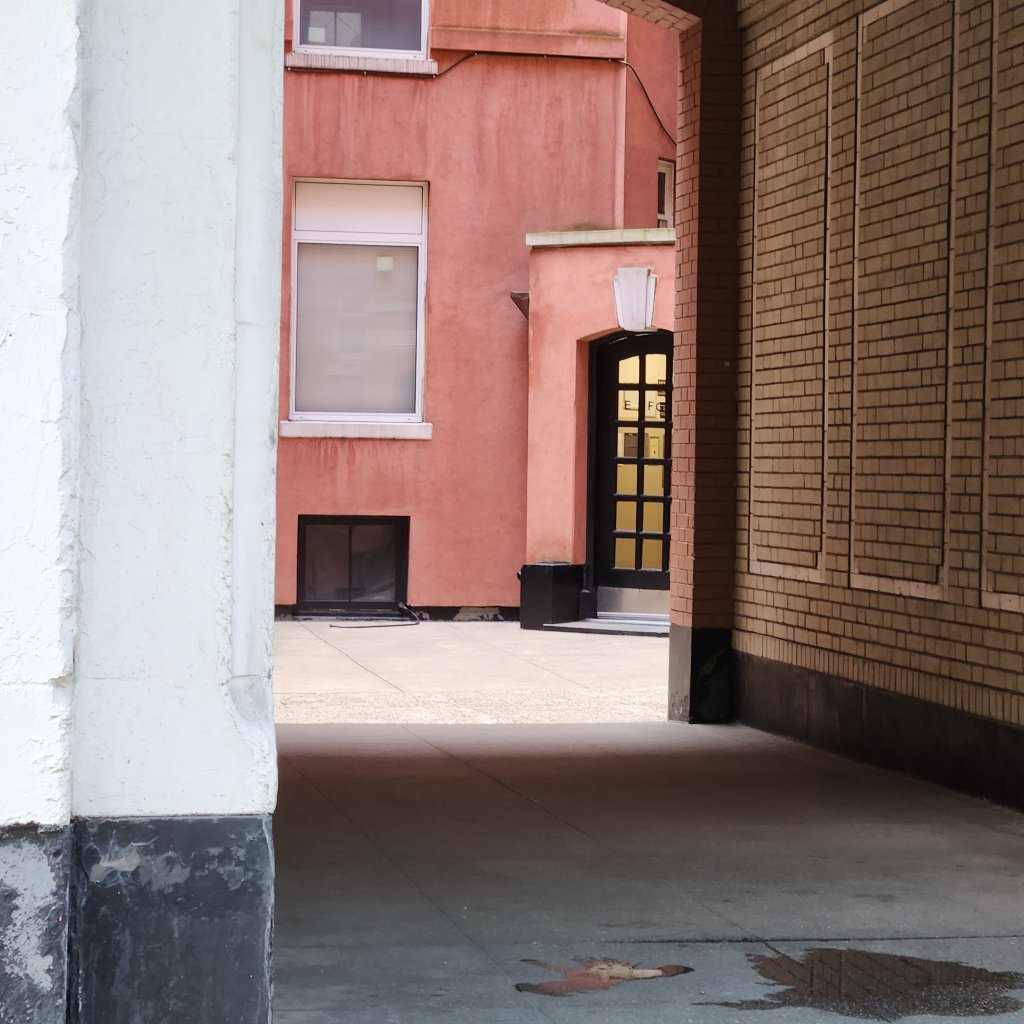
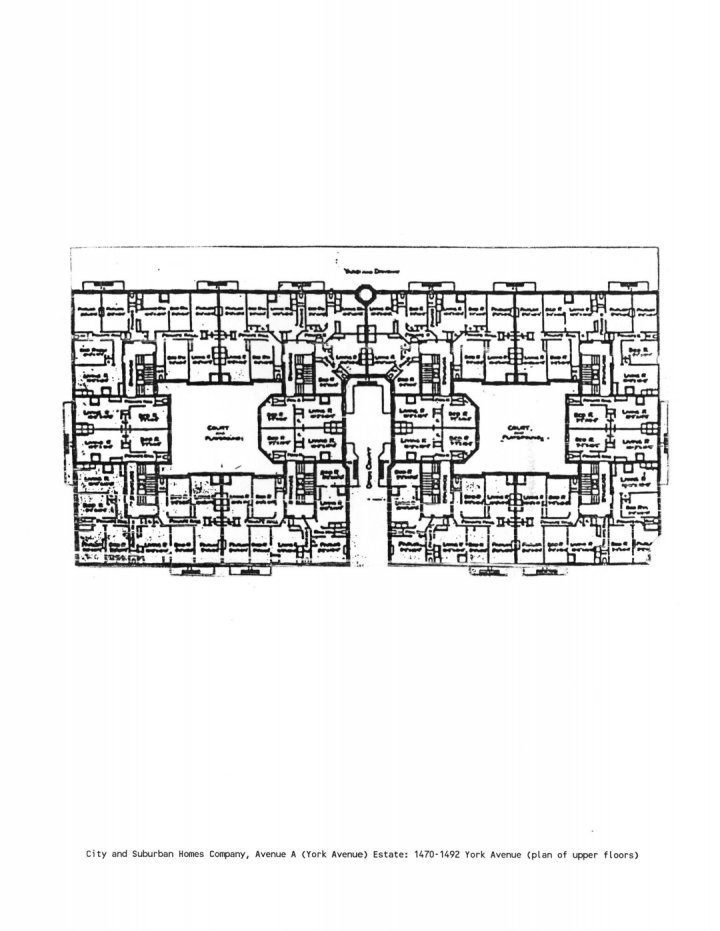
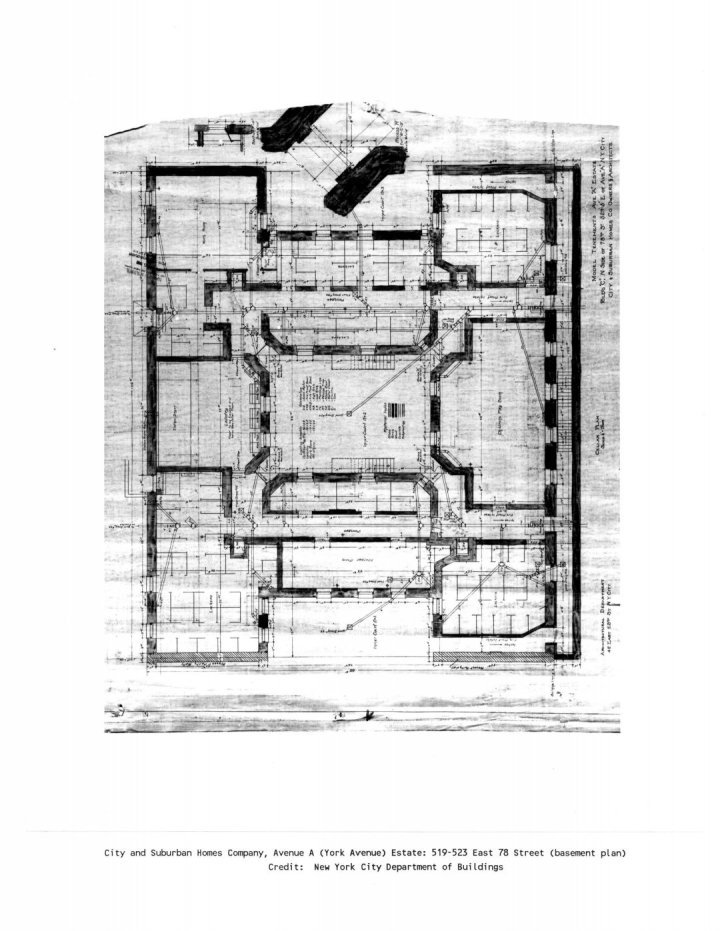
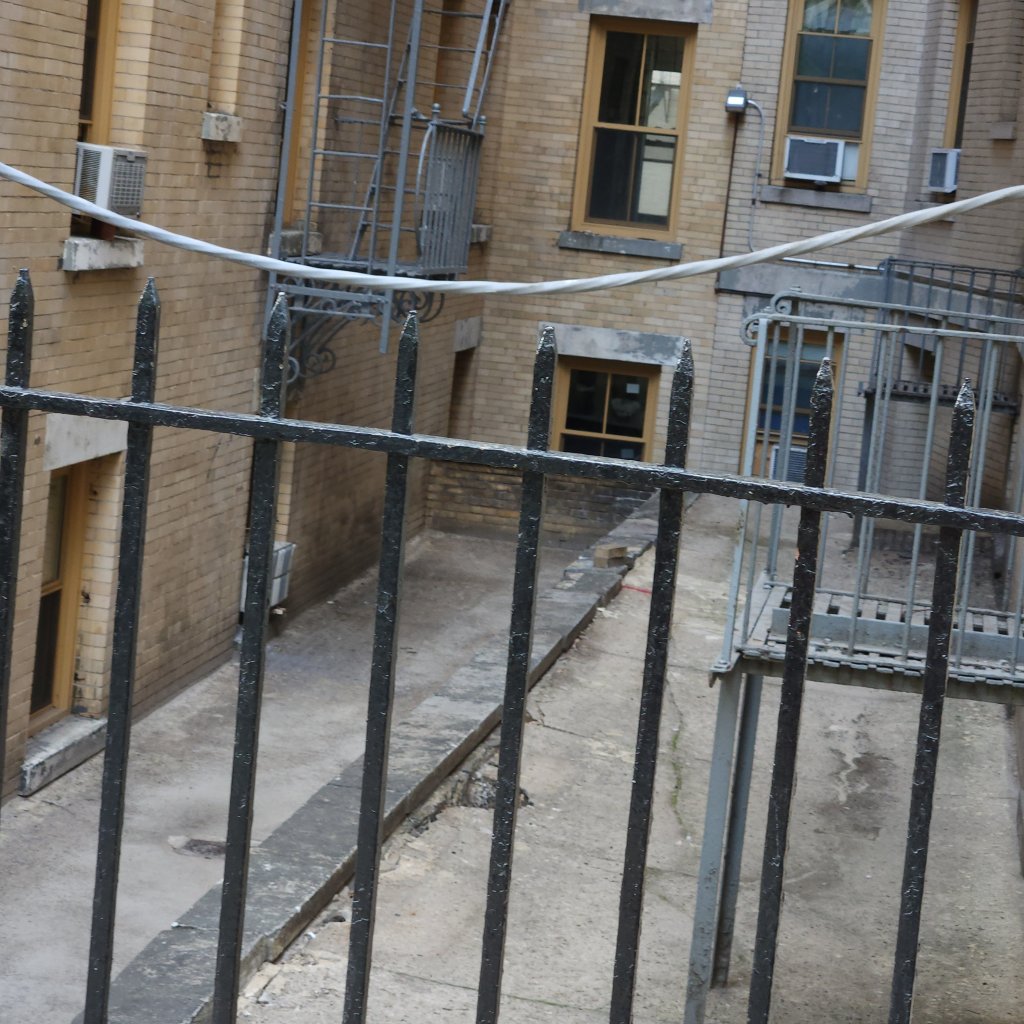
We live in a complex replete with intricate passages. Every peek looks like you’re discovering a secret maze or labyrinth.
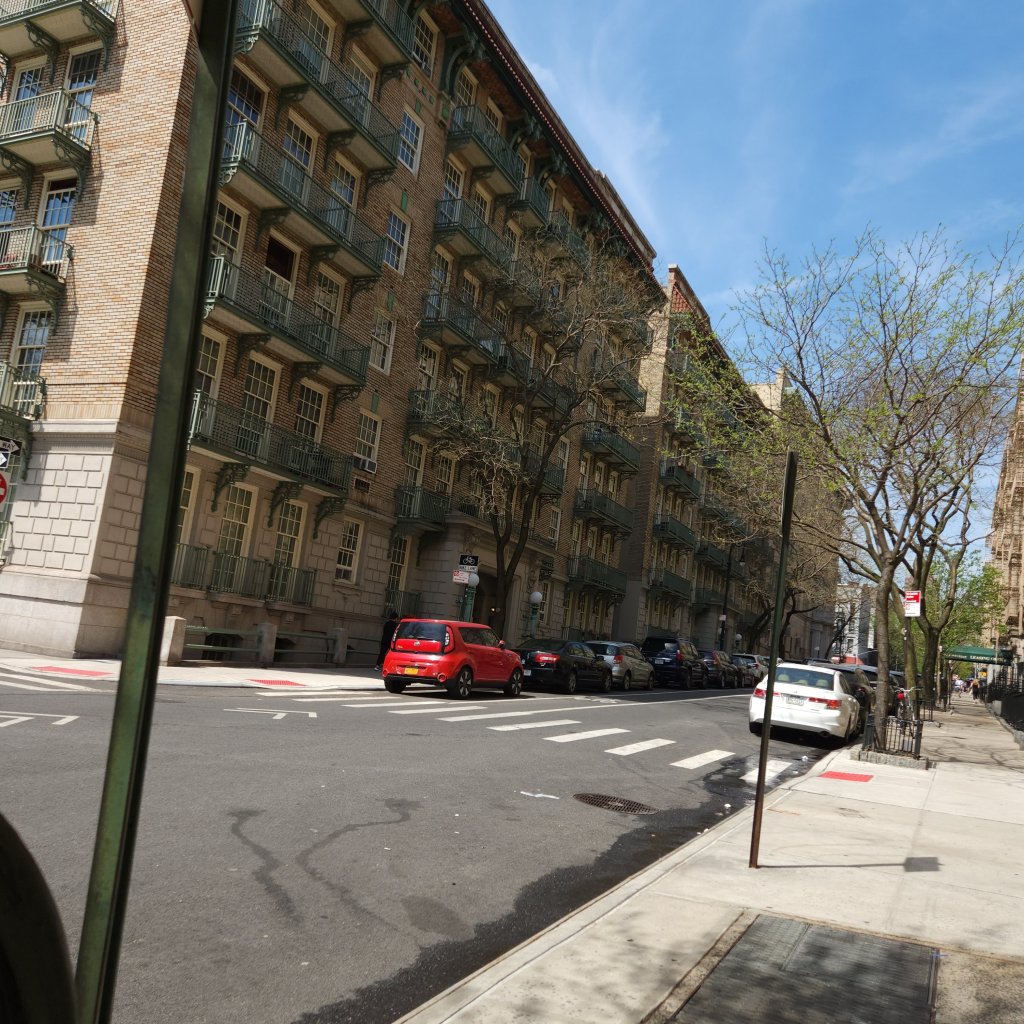
Our neighboring landmarked buildings, the Cherokee Place apartments, have been converted to coops.**
64th Street “campus” of City & Suburban houses
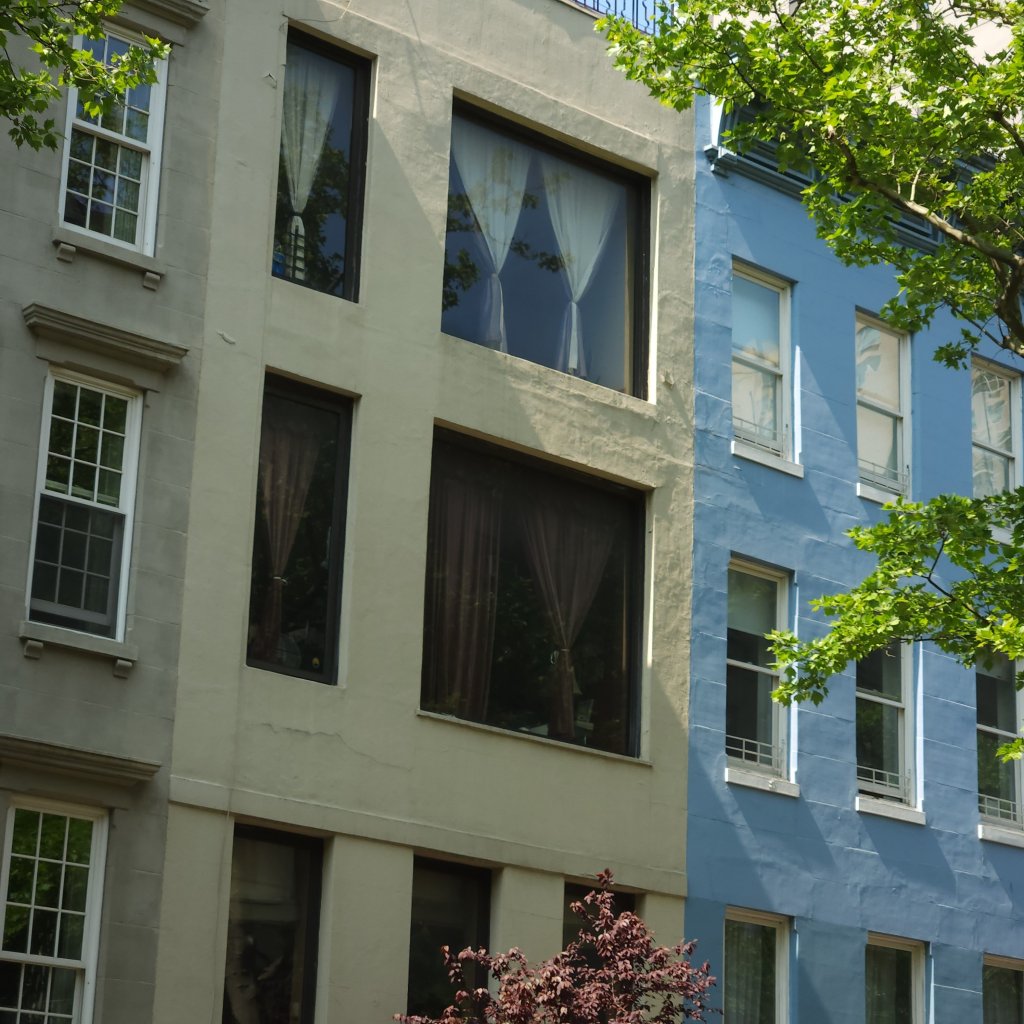
Space for windows and room to breathe were part of the design.
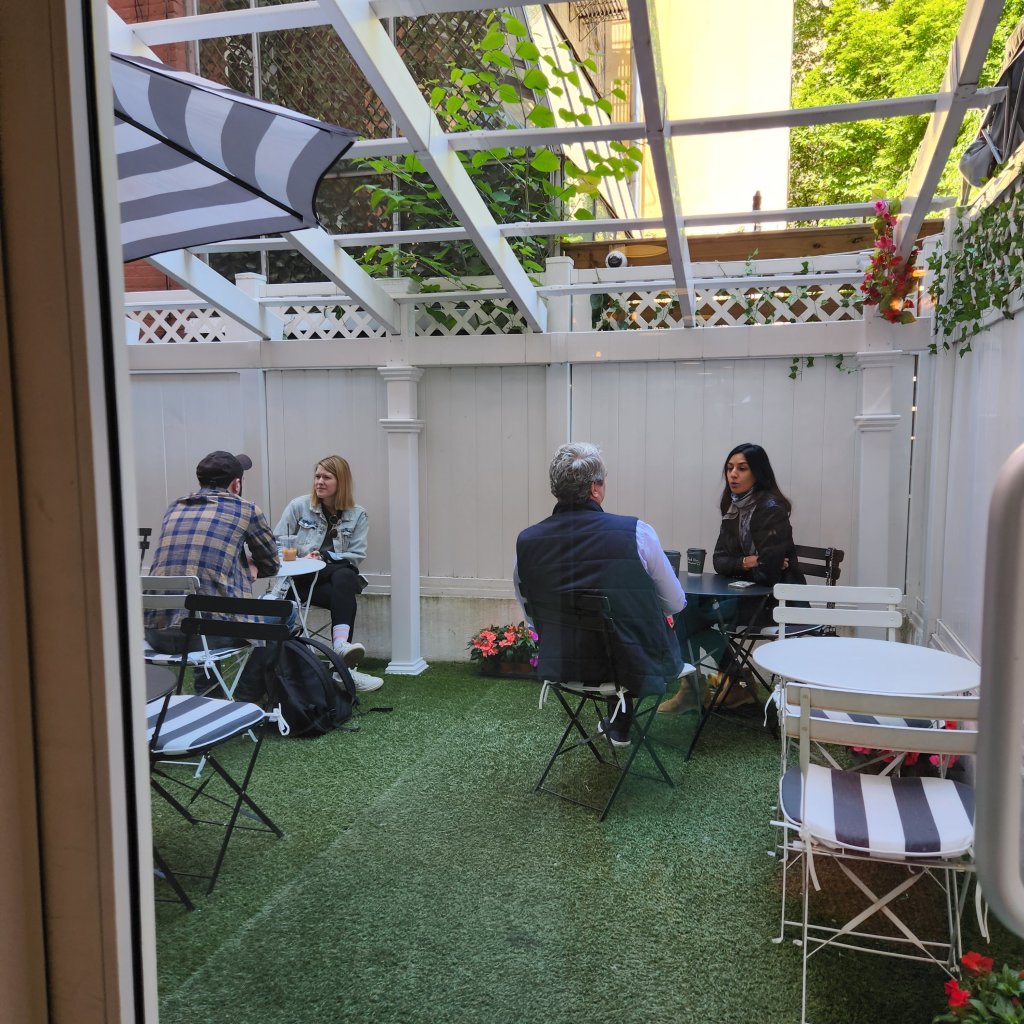
These little backyards are hidden gems. This is not the only restaurant taking advantage of its real estate.A staid old East End building looks like it once had its entrance on Marie Curie PlaceThe service staff have access from East End Avenue to what is now the backway at Marie Curie Place
**As interesting and attractive as these historic artifacts might be, they lack modern amenities and luxury.
They were built as tenements, and along with their landmark designation comes a prohibition to make any improvements.
This brings up the question of whether conserving them is beneficial.
While I have explored that question before, it bears further examination. I look forward to discussing this at greater length in upcoming blog posts.



 Walk with Me, Too